


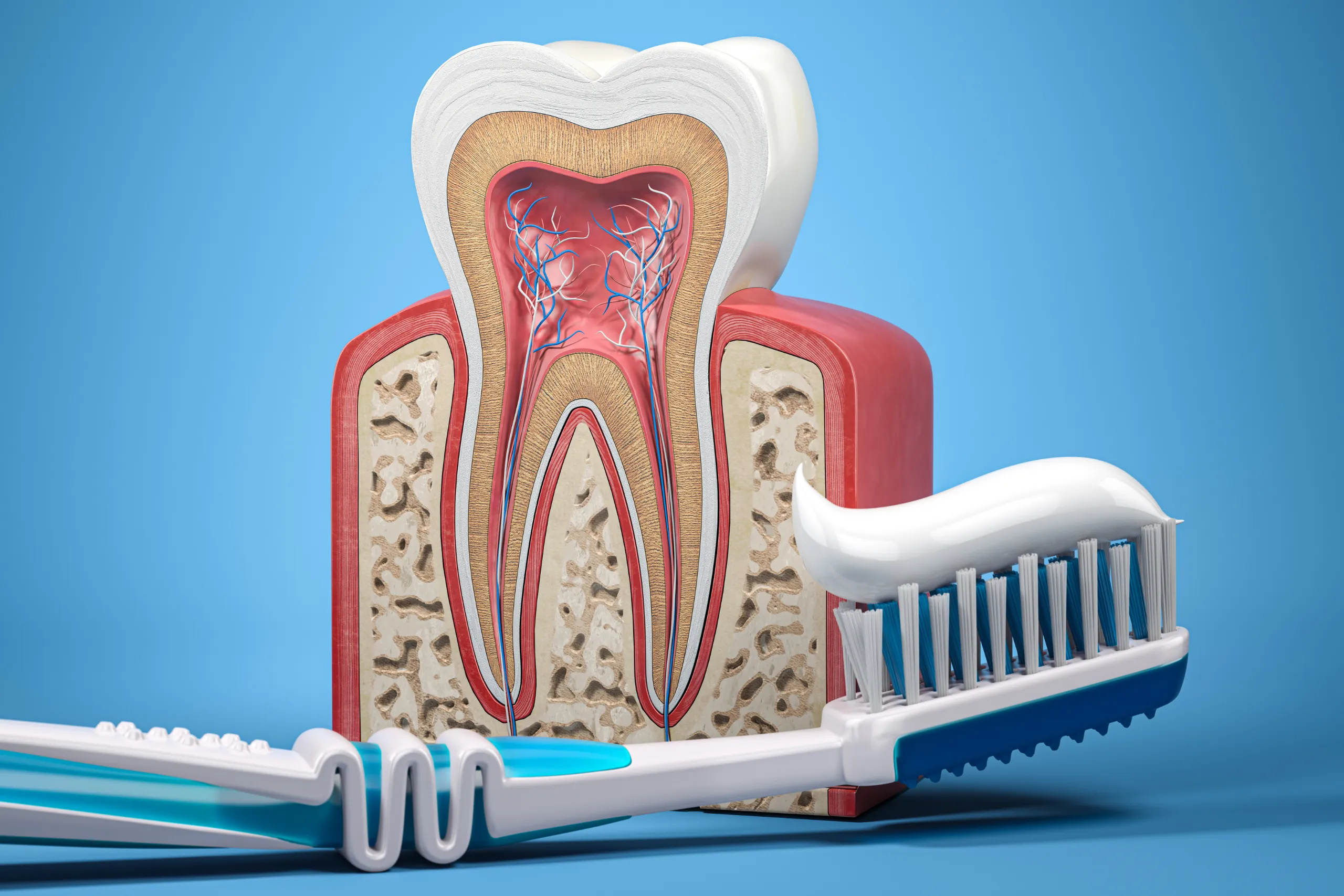
Plaque is a major cause of both tooth decay and gum disease. It builds up on your teeth every day, even if you brush regularly like you’re supposed to. You might not notice it at first, but if it isn’t removed properly, it attacks your enamel, irritates your gums and eventually hardens into tartar.
The good news is that a few simple daily habits will keep it under control. Below, we explain what plaque actually does, the signs to look out for and when it’s worth seeing a professional.
What Is Dental Plaque?
Plaque is a soft, sticky film that forms when the bacteria in your mouth mix with saliva and leftover food. It collects around the gumline and between your teeth, which are exactly the places a toothbrush struggles to reach.
Plaque itself is a normal part of life, so there’s no need to panic if your teeth feel slightly fuzzy between brushes. The important thing is removing it every day, before it has the chance to cause problems.
How Does Plaque Damage Your Teeth and Gums?
It fuels the acid attacks that cause decay
When bacteria in plaque feed on sugars from food and drink, they produce acids that attack your tooth enamel. How often this happens matters more than how much sugar you have. Grazing on snacks or sipping sugary drinks all day keeps your teeth under almost constant attack. Over time, that weakens the enamel enough for cavities to form.
It irritates your gums
Plaque that sits along the gumline irritates your gums, leaving them red, swollen or prone to bleeding when you brush. More often than not, this is a sign of gingivitis, the early stage of gum disease. Caught at this point, it can usually be reversed with thorough daily cleaning and the right dental care.
Left alone, gingivitis can develop into periodontitis, which damages the tissue and bone that hold your teeth in place. This is the stage where teeth can become loose and, in some cases, fall out.
It hardens into tartar
If plaque isn’t removed, minerals in your saliva harden it into tartar, also called calculus. Tartar bonds firmly to your teeth and gives fresh plaque a rough surface to cling to, so the problem snowballs. You can’t brush or floss it away at home. Only a dentist or hygienist can remove it.
What Are the Signs of Plaque Build-Up?
Plaque isn’t always easy to see, but there are some signs worth keeping an eye on:
- Gums that bleed when you brush or floss
- Red, swollen or tender gums
- Bad breath that doesn’t go away
- Yellowish or hard deposits around the base of your teeth
These signs don’t automatically mean plaque is the cause, as other issues can produce similar symptoms. If you notice changes that don’t improve with better cleaning, book an appointment with your dentist so they can find out what’s going on. If your gums are very sore and swollen, or a tooth feels loose, ask for an urgent appointment.
How Can You Keep Plaque Under Control at Home?
This is the part you’re in charge of, and it takes just a few minutes a day. The NHS advice on keeping your teeth clean comes down to a handful of habits:
- Brush twice a day for about two minutes, including last thing at night, using a toothpaste with at least 1,350ppm fluoride.
- Spit, don’t rinse, after brushing, so the fluoride stays on your teeth.
- Clean between your teeth every day with floss or interdental brushes, as this is where plaque hides along the gumline.
- Cut down on how often you have sugary food and drink, not just how much.
- If you use mouthwash, don’t use it straight after brushing. Choose another time of day, such as after lunch.
If you’re not sure which interdental brush size fits your teeth, ask at your next appointment. Getting the size right makes cleaning between your teeth far easier.
When Can a Dental Hygienist Help?
Even with good brushing habits, some areas are hard to get your toothbrush into. Once plaque has hardened into tartar, no amount of brushing will shift it. A scale and polish removes that tartar from your teeth and along the gumline, and your hygienist will show you the spots your routine is missing.
At Sharrow Dental, your dentist will let you know at your check-up whether you’d benefit from hygiene appointments and how often to come in. Where scaling is clinically needed, it’s available on the NHS, and private hygiene appointments are also available.
If you’re looking for a dental hygienist Essex patients can see locally, our Chelmsford team can help. We see patients for bleeding gums, stubborn deposits and long-term gum health.
Plaque and Tartar FAQs
Can you remove tartar at home?
No, tartar can not be removed at home. Once plaque has hardened into tartar, brushing, flossing and mouthwash will not shift it. A dentist or hygienist removes it with professional scaling instruments, and scraping at it yourself risks damaging your gums.
Is plaque the same as tartar?
No, plaque and tartar are different. Plaque is the soft, sticky film that forms on your teeth every day and can be removed by brushing and cleaning between your teeth. Tartar is plaque that has been left long enough to harden, and it needs professional removal.
Do bleeding gums mean I have gum disease?
Bleeding gums are one of the most common signs of gum disease, usually in its early stage, but they are not the only possible cause. If your gums bleed regularly when you brush, see your dentist so they can check what is behind it.
Book a Check-Up With Sharrow Dental
Plaque is common, but leaving it to build up can lead to decay, gum disease and, over time, tooth loss. Call Sharrow Dental on 01245 354046 or contact the team online. We’ll talk through your oral hygiene and find the best way to keep your teeth and gums healthy.
Sources
- NHS: Gum disease
- NHS: How to keep your teeth clean
